
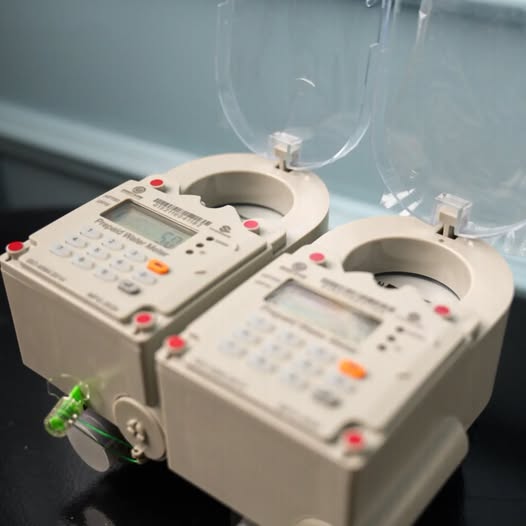
What Is a Prepaid Sub-Meter? A Simple Guide for Property Owners in Kenya
Published 25 September 2026
Managing utilities in a multi-unit property can quickly become complicated. A landlord may receive one bill for the entire building, while tenants use different amounts of energy and water. When the total cost is divided using estimates or a fixed amount, disagreements, delayed payments, and revenue losses can follow.
A prepaid sub-meter provides a clearer and more practical approach. It measures utility consumption for an individual unit, tenant, shop, office, or production area and allows users to pay for consumption in advance. Prepaid sub-metering helps property owners improve cost recovery while giving tenants more visibility and control over their utility use.
What is a sub-meter?
A sub-meter is a secondary meter installed downstream of a main, or ‘mother’, meter. The main meter records the total utility consumption for a property. The sub-meter measures the portion used by a specific unit or area within that property.
For example, an apartment building may have one main energy connection. Each apartment can then have its own energy sub-meter. The main meter records the building’s total consumption, while each sub-meter records the consumption of one apartment.
The same principle applies to water. A property can use sub-meters to allocate consumption by apartment, shop, office, tenant, floor, or other defined area.
How does prepaid sub-metering work?
Prepaid sub-metering follows a pay-before-use model. The process is straightforward:
1 A meter is assigned to a unit or user. The meter records the utility supplied to that unit.
2 The tenant purchases credit. With Smart Flow Metering, tenants can buy tokens through M-Pesa using the designated payment process.
3 The tenant receives a token. The token is sent to the tenant, typically by SMS.
4 The token is entered into the meter. The credit is loaded onto the assigned meter.
5 The meter deducts consumption. As electricity, water, or gas is used, the available credit reduces according to the applicable tariff or setup.
6 The system provides usage visibility. The tenant and property manager can monitor purchases, meter activity, and consumption information through the available channels.
For water applications, a prepaid sub-meter may also include a smart valve. This can help control supply when credit reaches zero and support early identification of unusual usage or possible leaks.
Why do property owners need sub-metering?
1. More accurate utility cost recovery
When a building has one main meter, the property owner still needs a way to recover the utility cost from individual users. A sub-meter makes it possible to allocate charges according to recorded consumption rather than relying only on equal sharing or estimates.
This can reduce the gap between what the property pays for utilities and what it collects from tenants.
2. Fewer billing disputes
Utility disputes often arise when tenants cannot see how a charge was calculated. Individual sub-metering creates a clearer link between a unit’s consumption and its payment responsibility.
A transparent process helps landlords and tenants discuss actual usage instead of debating an unverified estimate.
3. Better payment discipline
Prepaid metering changes the collection process. Instead of waiting for tenants to settle a monthly utility bill, the tenant purchases credit before consumption. This can reduce the administrative burden associated with following up on outstanding utility payments.
It also helps property managers separate rent collection from utility collection.
4. Greater tenant control
Tenants can see their own utility use and decide when and how much credit to purchase. This gives them a clearer view of their consumption patterns and can encourage more deliberate use of electricity, water, and gas.
5. Faster identification of unusual consumption
A sudden increase in usage may indicate a leak, faulty equipment, an operational change, or an issue that requires attention. Unit-level information helps a property manager investigate the right area instead of searching through the entire property.
6. Easier property management
A digital metering setup gives landlords and property managers access to token purchases, usage information, meter activity, notifications, or dashboard visibility, depending on the system configuration.
Who can benefit from prepaid sub-meters?
Landlords and property owners
Landlords can use prepaid sub-meters to improve utility cost recovery, reduce billing disputes, and manage several units through a more consistent process. The approach is especially useful where tenants have separate units but share a common main utility connection.
Property managers
Property managers need reliable information to manage collections, respond to tenant questions, and identify unusual activity. Sub-metering gives them a more structured way to monitor utilities across an apartment block or commercial complex.
Tenants
Tenants benefit from paying for their own consumption and having better visibility into their usage. They are less likely to be charged for another unit’s excessive consumption when utility allocation is based on individual metering.
Commercial and industrial users
Shops, offices, warehouses, and factories often have different operating hours and equipment loads. A suitable sub-meter can help allocate costs by tenant, department, or facility area. For higher-demand sites, a three-phase sub-meter may be more appropriate than a standard single-phase solution.
What should you consider before installing a sub-meter?
The best metering setup depends on the property rather than on a one-size-fits-all product. Before installation, consider the following questions:
• Which utility needs to be measured? Electricity, water, gas, or more than one utility?
• How many units or users need separate measurement?
• What type of load does each unit have? Residential, commercial, or industrial loads may require different meter specifications.
• Is prepaid payment required? Prepaid systems can be useful when the priority is payment control and reduced arrears.
• Where will the meters be installed? The installation point should support safe access, maintenance, and tamper protection.
• How will tenants purchase and receive credit? A familiar payment channel, such as M-Pesa, can make adoption easier for tenants in Kenya.
• What information should the property manager see? Confirm whether the system provides notifications, dashboard access, usage records, and meter activity information.
• How will the system connect to the existing utility arrangement? The sub-metering plan should account for the main or mother meter and the property’s existing wiring or pipework.
A professional assessment can help determine the correct meter type, installation approach, tariff configuration, and onboarding process for the property.
Is prepaid sub-metering suitable for your property?
Prepaid sub-metering may be a strong fit if your property has:
• Multiple residential units sharing one main utility connection.
• Tenants who need to pay for electricity, water, or gas separately.
• Repeated delays in utility payments or difficulty recovering costs.
• Disputes caused by estimated or equally divided utility bills.
• A need to monitor consumption and meter activity more closely.
• Commercial or industrial users with different load requirements.
It is important to select a system that matches the property’s technical requirements and to use qualified installation support. Meter selection, wiring, piping, safety, configuration, and tenant communication should all be handled carefully.
Smart Flow Metering: a simpler way to manage utilities
Smart Flow Metering helps landlords and property managers manage prepaid electricity, water, and gas sub-metering for modern residential, commercial, and industrial properties. Its solutions include individual-unit metering, M-Pesa token payments, automated notifications, leak detection for supported water applications, multi-tariff management, common-area cost allocation, and three-phase metering for higher-capacity sites.
The result is a clearer utility management process: tenants pay for their own usage, landlords improve cost recovery, and property managers gain better visibility across the property.
Ready to take control of your property’s utility management?
Stop relying on estimates, manual follow-ups, and one-size-fits-all utility charges. Talk to Smart Flow Metering today to find the right prepaid energy, water, or gas sub-metering solution for your property.
Whether you manage apartments, a commercial complex, or an industrial facility, the Smart Flow team can help you assess your requirements, choose the appropriate meter, and plan the next steps.
Get started today:
• Call or WhatsApp: +254 705 555222
• Email: inquiries@smartmetering.africa
• Visit: APA Arcade Suit 23, Hurlingham Kilimani, Nairobi
Make every unit accountable. Make utility management simpler.
Choose Smart Flow Metering.